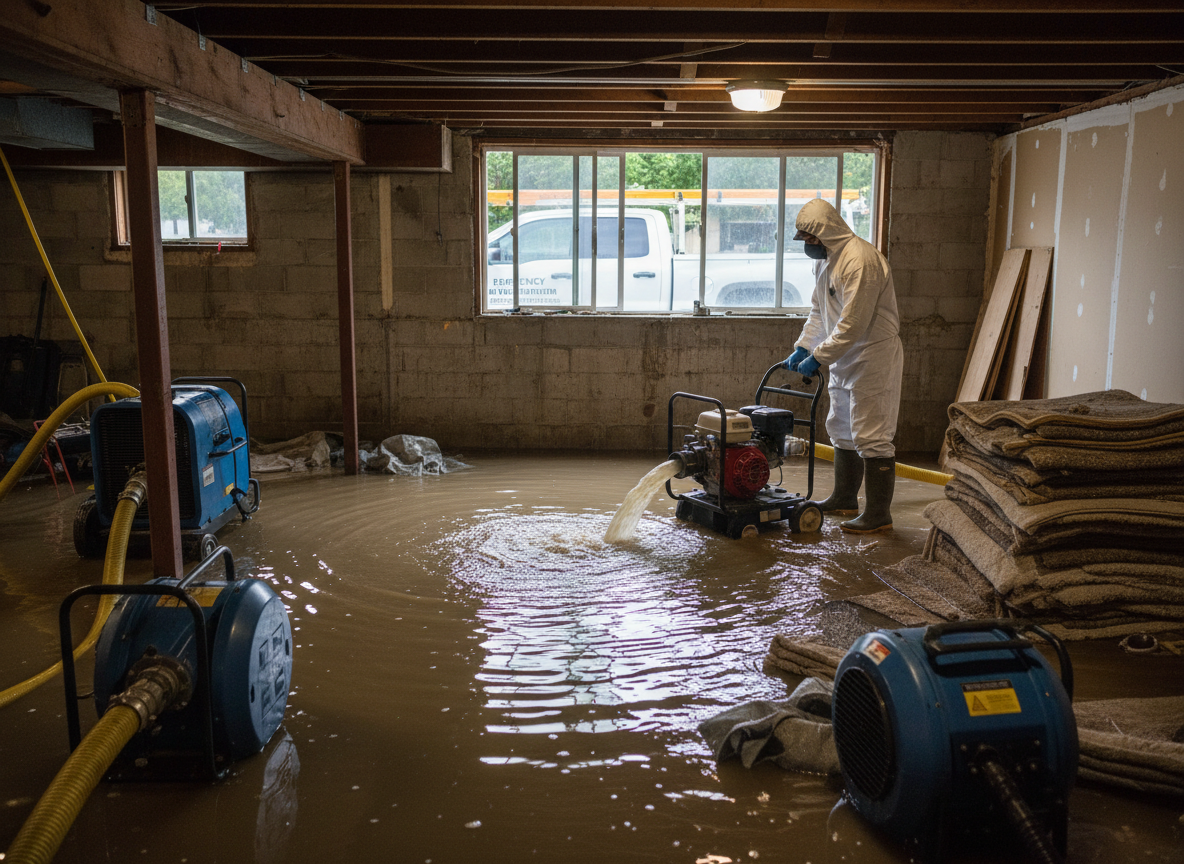
Lakewood sits just south of Tacoma with a mix of 1950s ranch houses and mid-century homes clustered around American Lake and the shores of Fort Steilacoom Park. Wet winters bring steady rain that pools against older foundations and fills crawlspaces, especially on the flatter lots east of Gravelly Lake Drive. Our crew at 5111 Burlington Way responds directly to these streets, extracting water and drying wall cavities before mold sets in during the long damp season.
Many Lakewood properties back up to Joint Base Lewis-McChord or sit near Clover Park Technical College, where narrow driveways and fenced yards limit equipment access. We bring portable extractors and dehumidifiers that fit through side gates and work around mature landscaping common in the area. Quick arrival from Tacoma keeps small leaks from spreading through the slab-on-grade construction found in much of the neighborhood.
Local drainage patterns around Lakewood Towne Center and along 100th Street SW often direct runoff toward residential blocks during heavy storms. We map these flows on arrival so drying plans address both the visible water and the hidden moisture trapped under flooring in split-level homes typical here.
Around 1. Lakewood
We regularly work near:
- 📍Fort Steilacoom Park
- 📍American Lake
- 📍Lakewood Towne Center
- 📍Clover Park Technical College
- 📍Gravelly Lake Drive
Water Damage Restoration in 1. Lakewood — Local Notes
- •Clay-heavy soils around American Lake slow natural drainage, so we often run longer drying cycles on east-side streets after winter storms.
- •Many homes built in the 1960s near Fort Steilacoom Park have crawlspaces without vapor barriers, requiring targeted moisture mapping before equipment placement.
- •Narrow lots along Gravelly Lake Drive limit truck access, so we stage portable equipment at the curb and carry hoses through side yards.
- •Proximity to JBLM means some properties have older galvanized plumbing that fails during freeze-thaw cycles common in Pierce County winters.