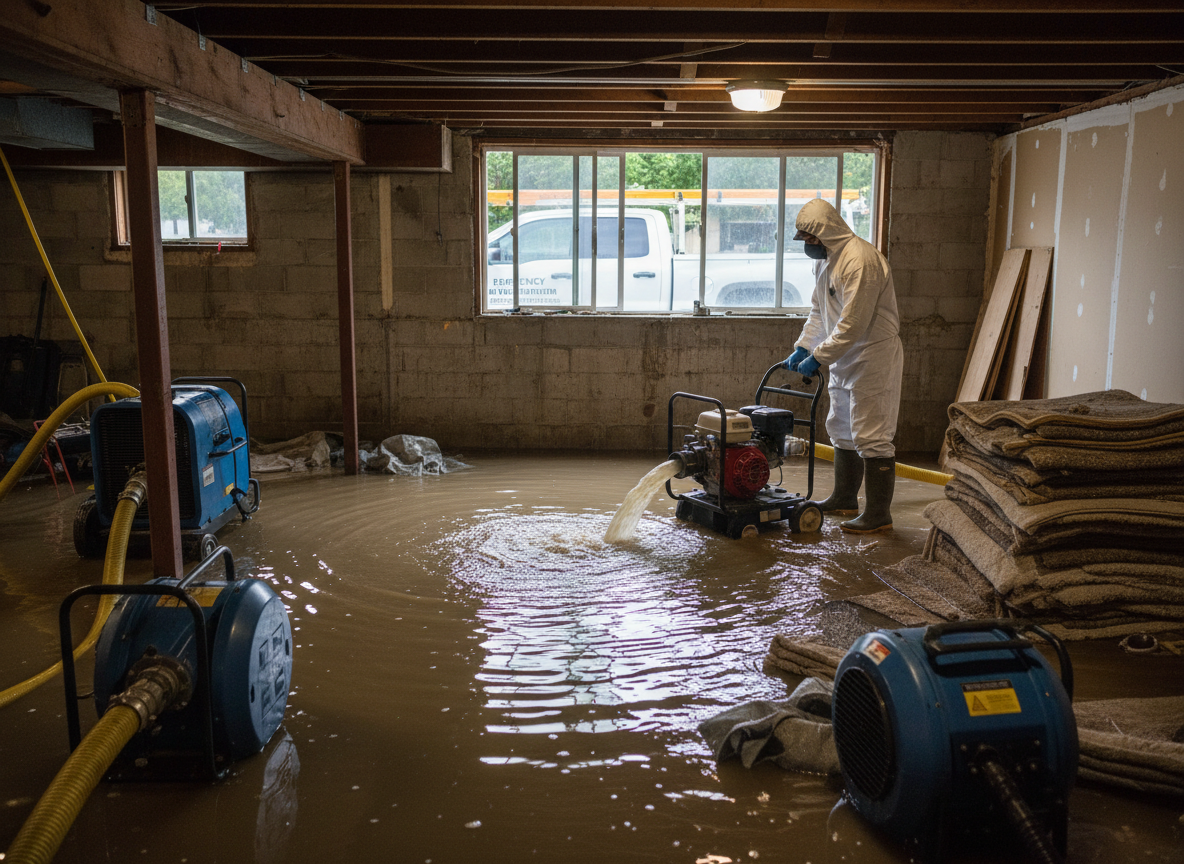
Tacoma's mild marine climate brings steady winter rain that finds every weak point in older housing stock, especially the 1920s–1950s homes common in the North End, Proctor District and Hilltop. When a roof leak or burst pipe hits, water travels quickly through plaster-and-lath walls and into crawl spaces that sit close to the water table in the South End and Eastside. Delaying extraction allows moisture to wick into subfloors and joists, creating conditions for hidden mold within days.
We map moisture with thermal imaging and pin meters before any demolition, then use directed air movers and dehumidifiers sized for the square footage and construction type. In multi-story homes near the Tacoma Dome or Stadium District, we isolate affected floors to protect unaffected areas and prevent cross-contamination through shared HVAC runs. Federal Way and University Place jobs often involve slab leaks that require concrete scanning before we can safely open the floor.
After water removal we document every step for insurance adjusters and leave the structure at manufacturer-specified drying levels before any reconstruction begins. Edge cases we see regularly include saturated insulation behind brick veneer on West End properties and water that has migrated under hardwood floors in Lakewood rentals.
Technician insight
In Tacoma the thing that catches most people out with Emergency Water Damage Restoration is how quickly water travels under the tongue-and-groove subfloors in 80-year-old Hilltop and Proctor District homes; once it reaches the joists you have to pull baseboards on both sides of the wall or the drying never finishes.
Stadium District Apartment Water Intrusion
A second-floor unit near Union Station experienced a supply-line failure that soaked the bedroom and hallway. We found water had already reached the first-floor ceiling through the original plaster. Extraction and targeted drying prevented mold growth and allowed the owner to reopen the unit within five days.
Emergency Water Damage Restoration Services We Offer
✓Emergency Water Extraction
Rapid removal of standing water from basements, crawl spaces and first floors using truck-mounted pumps sized for Tacoma rainfall volumes.
✓Structural Drying and Dehumidification
Placement of commercial air movers and desiccant dehumidifiers calibrated to older lath-and-plaster and newer drywall assemblies found across Pierce County.
✓Category 3 Black Water Cleanup
Containment, removal and disinfection after sewage or floodwater intrusion common during heavy winter storms in low-lying South End and Eastside blocks.
✓Subfloor and Joist Drying
Targeted drying beneath hardwood and tile in North End and Proctor District homes where moisture has wicked into tongue-and-groove subfloors.
✓Content Drying and Pack-Out
Documentation, removal and climate-controlled drying of furniture, rugs and personal items before returning them to restored rooms.
Emergency Water Damage Restoration Cost in Tacoma, WA
| Service | Typical Range | What Affects It |
|---|---|---|
| Initial Assessment And Moisture Mapping | $150–$300 | Higher when multiple floors or crawl spaces require access in older North End homes. |
| Emergency Water Extraction | $400–$900 | Depends on gallons removed and whether sewage or floodwater is involved. |
| Equipment Drying Package | $600–$1,800 | Daily rate for air movers and dehumidifiers; length determined by daily readings. |
| Category 3 Containment And Disinfection | $800–$2,200 | Required for sewage backups common after heavy rains near the waterfront. |
Ranges are typical for Tacoma, WA and confirmed with an exact written quote before any work starts.
How it works
- 1
Arrival And Safety Assessment
Technician arrives within the service window, shuts off water sources if still active, and identifies electrical or structural hazards before any extraction begins.
- 2
Moisture Mapping
We scan walls, floors and ceilings with meters and infrared cameras to chart the full extent of water migration through Tacoma's typical construction.
- 3
Water Removal And Containment
Standing water is extracted and affected zones are isolated to stop migration into unaffected areas of the home or neighboring units.
- 4
Drying And Monitoring
Equipment is set and daily moisture readings are recorded until materials reach safe drying levels for reconstruction.
- 5
Final Documentation
Photos, moisture logs and scope of work are compiled for the property owner and insurance carrier.
Pricing
Pricing varies by volume of water, number of affected rooms, and whether Category 3 contamination is present; we provide an upfront written scope after the initial assessment.