2026-11-10 · Derek Voss
What Tacoma Homeowners Should Know About Attic Moisture from Fall Storms
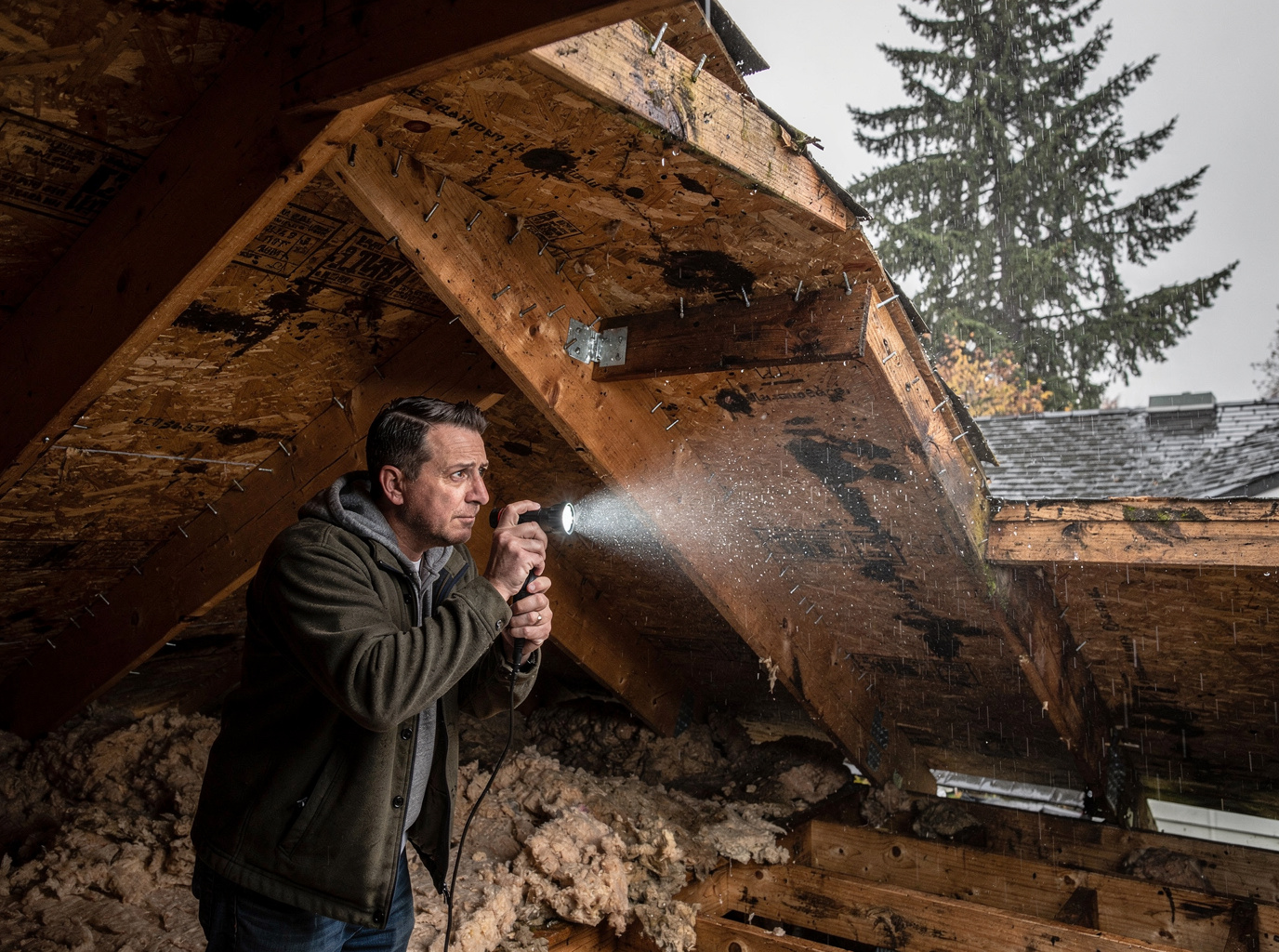
In Tacoma, attic moisture from fall storms often leads to visible mold or insulation damage within 48 to 72 hours when roof leaks or poor ventilation trap humidity from the region's wet winters. Pierce County's cool, damp air settles into attics of homes built before 1970 in neighborhoods like the North End and Hilltop, where original vents and older roofing allow moisture to linger longer than in newer construction. Homeowners near the Stadium District or Proctor District see the same pattern after repeated storms because the marine climate keeps relative humidity high even on milder days.
How Tacoma's Fall Storms Drive Attic Moisture
Tacoma receives steady rain from October through December that soaks roof surfaces and forces water under shingles or flashing on homes throughout the Eastside and West End. The mild marine climate keeps daytime temperatures in the 50s while nights drop into the 40s, creating temperature swings that turn attic air into condensation on cold sheathing. Older housing stock in Hilltop and South End often lacks modern ridge vents, so moisture from these storms stays trapped instead of escaping. Homes near Point Defiance Park or the Chihuly Bridge of Glass face extra wind-driven rain that finds small gaps around chimneys and skylights common in pre-1960 builds. Nearby cities such as Lakewood and University Place share the same storm patterns, but Tacoma's denser older neighborhoods show faster attic saturation because tree cover and narrow lots limit airflow around roofs.
Common Signs in Pierce County Attics
Homeowners checking attics after fall storms should look for dark spots on rafters, musty odors near access doors, or insulation that feels damp to the touch in areas like Downtown Tacoma and the Stadium District. Water stains around bathroom exhaust fans appear frequently in North End homes because those fans vent into unconditioned space rather than outside. In Eastside neighborhoods, sagging ceiling drywall below the attic signals trapped moisture that has already migrated downward. Rust on metal truss plates or nail heads shows up in 30- to 50-year-old homes common in the West End when humidity stays elevated for weeks. Checking after each major storm helps catch issues before they reach living spaces in Hilltop or South End properties.
Local Housing Factors That Increase Risk
Many Tacoma homes in the Proctor District and around Union Station were built between 1920 and 1950 with minimal insulation and single-pane vents that cannot handle the volume of moisture delivered by fall storms. Pierce County's clay-heavy soils hold water near foundations, raising indoor humidity that eventually rises into attics through ceiling penetrations. Homes near the Tacoma Dome or Museum of Glass often sit on smaller lots with limited side-yard airflow, so roof drying slows after rain. Federal Way and Lakewood properties share similar age and construction, yet Tacoma's urban tree canopy adds shade that keeps roof surfaces cooler and more prone to condensation. These conditions turn routine fall moisture into attic problems faster than in drier parts of the region.
Practical Steps After a Storm
Start by inspecting the attic on a dry day using a bright flashlight to scan rafters and insulation for wet areas, focusing on sections above bathrooms and kitchens in older North End homes. Improve ventilation by clearing soffit vents blocked by insulation or debris, a common issue in Hilltop properties. Run bathroom fans for 20 minutes after showers and consider adding a timer switch to reduce humidity that reaches the attic. If stains or soft insulation appear, remove affected material promptly to prevent mold spread into living areas. For homes in the South End or Eastside showing repeated issues, schedule a professional assessment rather than relying on temporary fixes that do not address underlying roof or vent problems.
When Professional Water Damage Restoration Helps
Persistent attic moisture after multiple storms often requires targeted drying equipment and moisture mapping that homeowners cannot replicate with basic fans. Water damage restoration teams familiar with Pierce County homes can locate hidden leaks around flashing or vents that standard inspections miss. In cases where insulation is saturated across large sections, full removal and replacement prevents long-term mold growth that affects indoor air quality. Water damage repair addresses structural wood that has begun to soften from repeated wetting. Homeowners in Lakewood or University Place facing similar issues can review how heavy winter rains affect homes near the Puyallup River in Tacoma for additional context on regional moisture patterns.